


.png)
Living History at the Three Michelin Key Hotel De L’Europe, Amsterdam

AMSTERDAM
Amsterdam is a city that moves with a rhythm all its own, a rhythm dictated by water, light, and centuries of trade, culture, and audacious civic ambition. The Amstel winds through the city like a silver thread, its banks dotted with buildings whose gables lean conspiratorially over the canals as though they have secrets to tell. To stay at Hotel De L’Europe Amsterdam, a member of The Leading Hotels of The World, is not merely to lodge in a luxury hotel — it is to inhabit a narrative that stretches back to the fifteenth century, when the site was home to Het Rondeel, a defensive tower protecting a city whose wealth and ambition already rivalled the great powers of Europe. There is a profound joy in arriving here: the sense that one is both in a hotel and inside history itself, where modern elegance and centuries of stories coexist as naturally as light on water. We arrived from Hong Kong via British Airways' exclusive Club Suite, then took a four-hour train from London St. Pancras to Amsterdam Centraal. For those travelling from the UK, British Airways also offers direct flights from London to Amsterdam.

A Legacy of Luxury and Local Lore
The current building dates from 1896, erected to replace a series of inns and hotels that had occupied the site for centuries. Its façade, facing the Amstel, retains the elegance of 19th-century grandeur, with subtle neoclassical flourishes and a solidity that reassures the guest that, unlike so many fleeting modern constructions, this place has endured — and will endure. The Heineken family’s ownership ensures that De L’Europe is a private sanctuary in a city increasingly overrun by multinational chains. There is a subtle intimacy here, a quiet insistence that guests are entering a place where care is personal, not corporate.

And yet, this intimacy is not quaint. It is paired with ambition. The hotel has weathered Amsterdam’s turbulent history — the German occupation, post-war reconstruction, and the recent wave of hyper-modern design that now defines much of the city centre. It has done so without compromising the integrity of its style or the elegance of its service. Staying here feels less like checking into a hotel and more like becoming part of a continuum, a narrative that stretches back through centuries.
The First Impression: Arrival as an Overture
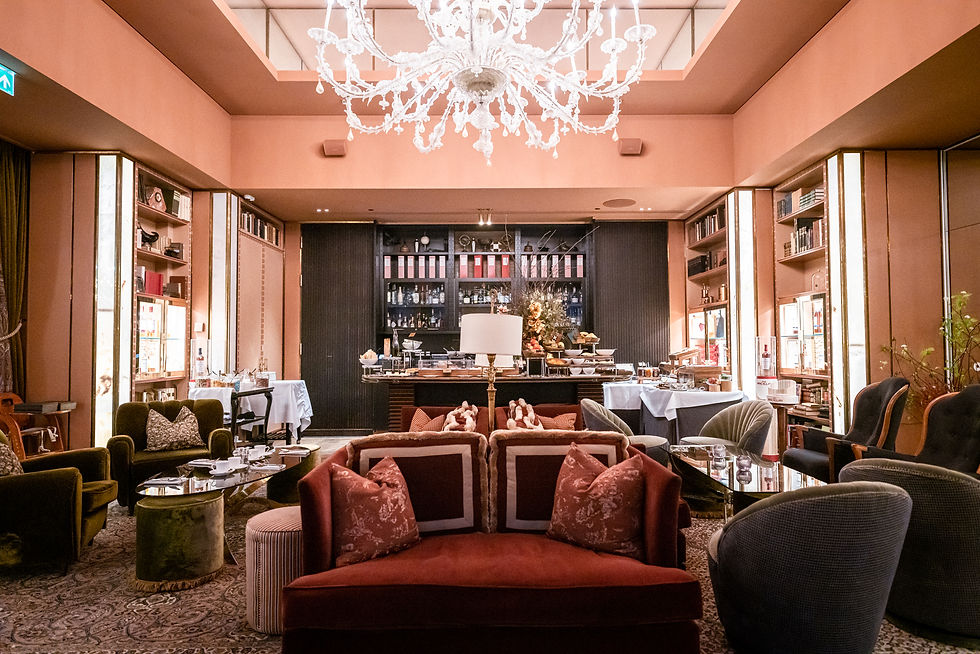
The lobby is expansive but intimate, a delicate balancing act achieved through careful placement of seating, soft lighting, and a gentle hum of activity that never overwhelms. Guests are greeted with the combination of efficiency and warmth that is the hallmark of a hotel that understands its place in the city. Check-in is a ritual in which personalisation is paramount: names are remembered, preferences noted, and gestures are offered with the effortless confidence of someone who knows what the discerning guest seeks before they even know themselves. There is a theatre to it, of course, but one that never feels contrived; the staff are storytellers as much as service providers, guiding you into the experience before you have unpacked a single bag.


The Rooms and Suites: Where History and Modernity Collide
The Junior Suite we occupied spans approximately 45 square metres. Floor-to-ceiling windows framed views of the Amstel that were almost painterly in their perfection: the boats gliding silently, their wakes catching sunlight like shards of gold; the gabled buildings leaning ever so slightly towards the water; the winter light softening every line and contour, as though the city itself were aware of its own beauty.
Interiors are a careful choreography of textures, colour, and material: rich woollen throws, polished wood surfaces, marble accents. The furniture balances formality and comfort; a reading chair invites contemplation, a desk encourages work without intimidation, and the bed — a cloud of linen and feather — suggests slothful indulgence without guilt. Bathrooms, meanwhile, are indulgent sanctuaries: deep soaking tubs, rainfall showers, and Diptyque toiletries that are locally sourced and elegantly presented.


Then there is ‘t Huys, the hotel’s creative wing, where local artists and designers occupy suites and create immersive cultural experiences. Each suite – from the Harper's Bazaar Suite to the Van Gogh Museum Suite – is a micro-exhibition, a curated intersection of design, craft, and narrative, offering guests a taste of Amsterdam’s contemporary creativity alongside the hotel’s historic grandeur.

Dining: Culinary Journeys Without Leaving the Building
Flore, with its two Michelin stars, serves dishes that are micro-seasonal, exquisitely plated, and sourced from Dutch farmers, foragers, and line-caught fisheries. For those seeking a more casual but no less compelling experience, Brasserie Marie offers the charm of a Parisian café with a Dutch sensibility, while Trattoria Graziella provides authentic Italian warmth, where sauces are slow-simmered, and bread is a ritual rather than an afterthought.
Freddy’s Bar, named after the hotel’s famous patron, offers intimate seating, craft cocktails, and a quiet confidence that encourages conversation over – obviously – a pint of Heineken, while Chapter 1896 provides speakeasy-style intimacy where mixology is elevated to an art form.

Wellness, Leisure, and Cultural Immersion
De L’Europe’s wellness centre is designed with equal attention to detail. The spa offers treatments that blend classical techniques with modern understanding of wellness and recovery, the gym is equipped with the latest machinery, and the pool, overlooked by terrace gardens, offers a calm reprieve from the city’s bustle.

Practical Advice & Insider Tips
Best Suite for First-Timers: Junior Suites are perfect for guests who want elegance without extravagance, offering river views and spacious interiors. For those seeking drama, the Van Gogh Suite or RVDK Suite provide immersive art experiences.
Hidden Hotel Gems: Walk the corridors of ‘t Huys early in the morning to enjoy quiet reflection, or visit Freddy’s Bar at sunset for a cocktail while watching the Amstel glow gold.
Dining Strategy: Reserve Flore at least two weeks in advance, but Brasserie Marie is ideal for spontaneous lunches or casual dinners. Chapter 1896 is perfect for late-night reflections with expertly crafted cocktails.
Cultural Pairings: Pair your stay with canal tours, Rijksmuseum, and Van Gogh Museum visits; use the hotel’s curated guides for off-the-beaten-path cultural spots.
Seasonal Advice: Spring and autumn provide the most cinematic views of the canals, while winter offers a cosy, fireside charm in the suites.
Final Verdict
Hotel De L’Europe combines history, culture, luxury, and personalised service with a fluidity that few hotels can match. Every suite, every corridor, every restaurant, and every staff interaction is part of a narrative that stretches across centuries, and yet feels intimate and present. Whether you are a first-time visitor or a returning connoisseur of Dutch charm, De L’Europe offers a combination of elegance, wit, and refinement that is both rare and indispensable.
Location: Nieuwe Doelenstraat 2-14, 1012 CP Amsterdam, Netherlands | Phone: +31 20 531 1777 | Email: hotel@deleurope.com | Instagram: @deleuropeams | Facebook: De L'Europe Amsterdam
Disclaimer: The writer was invited by Hotel De L’Europe to experience the property. All observations, assessments and opinions expressed are based on the writer’s independent experience and professional judgement.


Comments