


.png)
Curiosity Didn't Kill the Hotel: Inside the Character-Driven World of A Curious Group of Hotels

INTERVIEW
In an era when luxury hotels increasingly resemble one another — same marble lobbies, same scented candles, same carefully calibrated version of global chic — A Curious Group of Hotels has taken a different path. Its collection spans a literary hideaway on Paris's Left Bank, a canal-side mansion in Amsterdam, an eccentric Notting Hill institution and a seaside retreat in Brighton, united less by branding than by personality. Two of its properties — Canal House in Amsterdam and L'Hôtel Paris — are also members of Small Luxury Hotels of the World (SLH), reflecting the group's commitment to character-led hospitality.
For Joe Setchell, Group Marketing Director of A Curious Group of Hotels, the secret lies in curiosity: the willingness to look beyond the obvious, embrace a building's quirks and celebrate the stories already embedded within its walls. We spoke with Setchell about the soul of hospitality, the enduring appeal of historic properties, and why the future of luxury may be less about perfection and more about character.

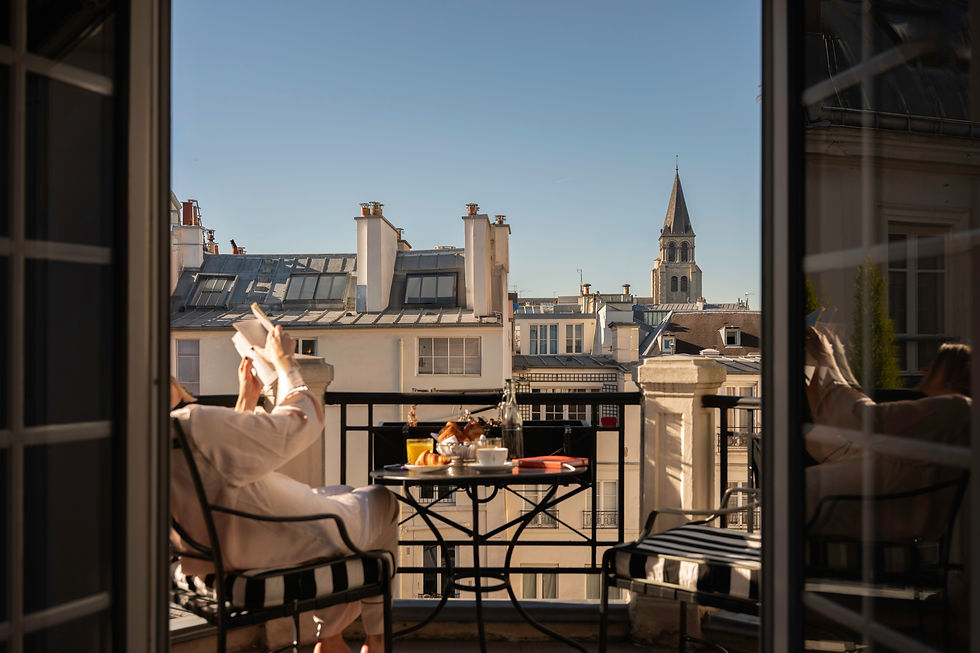
How did A Curious Group of Hotels come to life? What sparked the moment?
A Curious Group of Hotels came to life through a love of destination primarily, and buildings with stories already inside their walls. The group was never about creating a collection of hotels that looked or behaved the same. It was about finding properties with soul, history and a little theatre, then giving them the care, character and individuality they deserved.
Each hotel has its own world. L’Hotel in Paris has literary glamour and Left Bank artistry. Canal House in Amsterdam has culture and the quiet romance of the canals. The Portobello Hotel has that wonderfully eccentric Notting Hill spirit. Drakes has Brighton’s boldness, sea air and sense of escape. The spark was really the belief that great hotels should feel discovered, not designed by committee.
What does curiosity mean to you in the context of hospitality today?
Curiosity, to us, is the opposite of formula. It is the instinct to look closer, absorb the culture and notice the things that make a stay memorable.
In hospitality today, guests are incredibly well travelled. They don’t just want a beautiful room; they want a feeling, a story, a reason to remember where they were. Curiosity is what allows a hotel to be alive. It is in the curated design of every corner, the candle burning in the hallway, the way a team member recommends a local find that isn’t on every guidebook list. It is the small invitation to step slightly off-script.
How would you describe the soul of the group?
The soul of the group is character, comfort and a sense of having been let in on a secret.
None of the hotels is trying to be everything to everyone. They are small, atmospheric and highly personal, each with its own mood and identity. What connects them is that feeling of staying somewhere with a past, somewhere layered, somewhere with wonder. They all have that sense of being tucked away from the obvious, whether that is behind a discreet door in Saint-Germain, along a canal in Amsterdam, in the heart of Notting Hill or looking out to sea in Brighton.
They are hotels for people who like detail, personality and a little intrigue.

What first drew you to historic properties and character-led hotels rather than building something entirely new?
Historic properties have a depth that can’t really be manufactured. The proportions, the staircases, the slightly unexpected corners, the sense of people having passed through before you. These things give a hotel a natural emotional charge.
Of course, working with older buildings comes with its challenges, but that is also part of the charm. You are not starting with a blank page; you are continuing its story. Our role is to respect that narrative while making the experience feel relevant, comfortable and quietly chic for today’s guests.
What do modern luxury travellers value now that they perhaps didn’t a decade ago?
Modern luxury has become much less about formality and much more about feeling. Travellers still want beauty, comfort and service, of course, but they increasingly value authenticity, individuality and ease of service.
A decade or so ago, luxury was often measured by polish and predictability. Now, many guests want something more personal. They want to feel connected to the neighbourhood, to stay somewhere that couldn’t be anywhere else, and to experience service that is thoughtful rather than stiff. They value privacy, atmosphere, good taste and a sense of discovery.
Luxury now is often about emotional intelligence – knowing when to be present, when to step back, and how to make a guest feel genuinely looked after, through both the digital journey and face-to-face hospitality.

Your properties feel cinematic in very different ways. Do film, literature, or fashion influence how you shape the guest experience?
Absolutely. Each of the hotels has its own cinematic quality, and those worlds are very much part of the atmosphere.
L’Hotel will always have a literary and artistic pull, with its connection to Oscar Wilde and the Left Bank’s creative history. The Portobello has long had an association with musicians, actors and the more filmic side of London. Canal House has that painterly Amsterdam quality – mood, water, architecture, hidden gardens. Drakes has a kind of seaside glamour, a little more playful and community-led.
What details do you obsess over that most guests may never consciously notice?
The details that create atmosphere often work quietly. If you can pull together all five senses, and even add a sixth where possible, that is the secret. Fragrance, lighting, flowers, the feel of the linen, the tone of a pre-arrival email, the way a breakfast tray looks when it arrives, the warmth of a welcome and edible gift displayed in the bedroom.
Guests may not always consciously notice every one of these things, but they notice how they feel. That is what we obsess over. The experience should feel effortless, but behind that is a lot of thought about rhythm, mood and detail.
Which property feels most personally connected to you, and why?
That is a little like choosing a favourite child, because each hotel has such a different personality.
However, L’Hotel has an extraordinary emotional pull for us all. Firstly being our oldest property within the group, but it is also one of those rare hotels that people almost feel they have known before they arrive. There is an aura to it that is impossible to replicate.

If you could open a future Curious Group hotel anywhere in the world, where would it be?
It would have to be somewhere with layers in a most desirable neighbourhood. Somewhere with history, culture and a strong sense of place. We are drawn to cities and neighbourhoods that reward curiosity. Perhaps Lisbon, Edinburgh, Copenhagen or Barcelona would be fascinating, but ultimately it would come down to the property itself. The building has to have a soul before we can add ours.
What are your top five hotels outside of your portfolio that you love and why?
This is always difficult, because the best hotels tend to stay with you for very different reasons. But five that feel particularly inspiring are:
The Newt in Somerset
Maison Mistique in Thailand
Hotel Corazón, Mallorca
Hôtel Costes in Paris
... and the Palazzo Daniele, Puglia.
What they all share is a very distinct narrative and storytelling, each one cinematic in its approach, guest-led, and all with a clear point of view away from the usual grain. They know exactly who they are.
What are three things you can’t travel without?
Oh, far more than three. But a good camera, a notebook, a beautiful perfume, your favourite shoes, and something you might not quite wear at home. The hat you loved but haven’t dared to wear, the scarf that deserves to be seen, the outfit that only really makes sense somewhere else.
Travel is a chance to walk, discover, become slightly more yourself – or at least someone more interesting for a few days. And it’s always worth feeling your best while capturing the little moments you’ll want to remember.

What do you hope guests remember emotionally after leaving one of your hotels?
We hope they remember a feeling of having stayed somewhere with soul. Not just that the room was beautiful or the location was right, but that the hotel or team member made them feel something. We want guests to leave with a memory that feels personal to them – something intimate, atmospheric and difficult to recreate elsewhere.
After all these years in hospitality, what still excites you most about welcoming guests?
The magic is that no two stays are ever really the same. A hotel is a living thing, shaped not only by its history and design, but by the people who pass through it. Every guest arrives with a different reason for being there: a celebration, an escape, a first visit to a city, or sometimes a quiet moment of change in their life. Each one adds another layer to the story.
What still excites us is the privilege of being part of those moments. When hospitality is done well, it can be quietly transformative. It can make someone feel cared for, inspired, or simply very happy. That never stops being exciting.


Comments