


.png)
Inside Mandarin Oriental The Landmark, Hong Kong’s Reopening

HONG KONG
Mandarin Oriental The Landmark, Hong Kong reopened on 1 June 2026, marking a defining new chapter for one of Central’s most established luxury hotels. Set within the evolving LANDMARK complex as part of the broader “Tomorrow’s CENTRAL” redevelopment, the refreshed property introduces a more residential, design-led expression of contemporary hospitality, while retaining its position as a key culinary and lifestyle destination in the city.

The guest journey begins at a new entrance on Queen’s Road Central, designed to soften the transition from the city’s high-energy commercial core into a more intimate, composed interior world. Conceived by Hong Kong architect Joyce Wang, the arrival sequence draws inspiration from the city’s historic grand residences, reinterpreting their material warmth and spatial rhythm for a modern urban hotel.

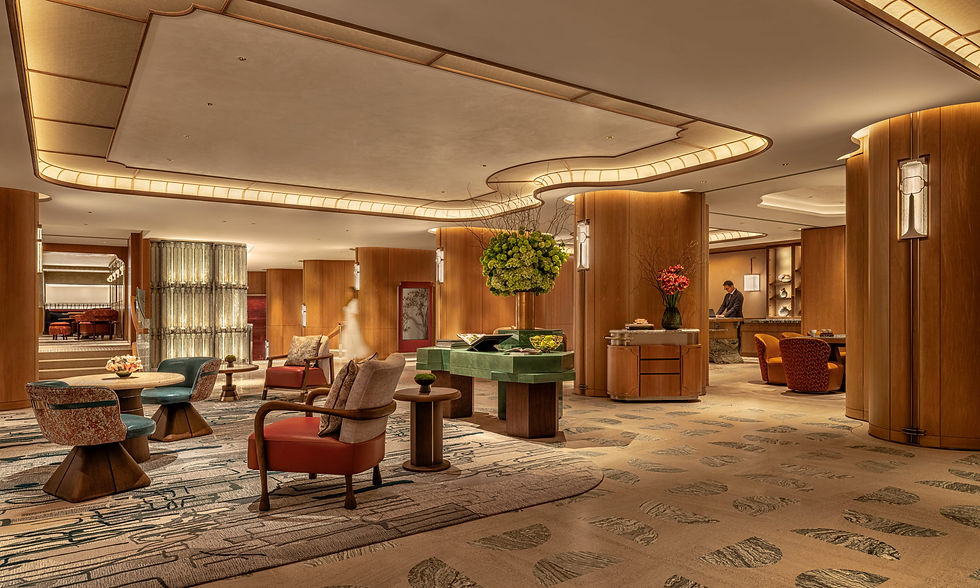
Terracotta tones, deep greens and textured finishes reference heritage homes such as Yu Yuen and Tai Fu Tai, while a sculptural curved stone staircase becomes the architectural centrepiece of the experience. As guests ascend, the space unfolds into a layered progression of alcoves and landings, punctuated by commissioned artworks that reflect Hong Kong’s skyline and creative identity. The result is an arrival experience designed not simply as circulation, but as a curated narrative of place.


Residential-Style Rooms and Suites
The hotel’s 109 rooms and suites have been fully reimagined to extend this residential concept. The entry-level L450 rooms, starting at 42 square metres, are conceived as urban sanctuaries, combining light timber flooring, patinated wall surfaces, Fromental silk wall coverings, and bespoke rugs inspired by Hong Kong’s historic brickwork patterns.
Custom-designed furnishings, including sculpted quilted leather headboards and Quivera 530-thread-count linen, reinforce a sense of understated luxury. In higher categories, the signature curved glass bathrooms return, anchored by the hotel’s distinctive seven-foot round bathtub, a long-standing architectural hallmark of the property.
At the top end, the 167-square-metre Entertainment Suite offers a fully realised private residence experience, complete with a Gaggenau kitchen, dining space for eight guests, a dedicated entertainment wall, and a master bedroom fitted with the FreshBed climate-controlled sleep system.

A Culinary Destination with Seven Michelin Stars
The reopening further strengthens the hotel’s position as one of Asia’s most concentrated fine-dining hubs, collectively holding seven Michelin stars and one Michelin Green Star. Under the leadership of Culinary and Food & Beverage Director Richard Ekkebus, the property continues to evolve its gastronomic identity while maintaining its established reputation for precision and innovation.
Flagship restaurant Amber remains central to this vision, with its contemporary French cuisine rooted in classical technique and a strong sustainability ethos. A new immersive concept, “Cellar Immersion,” expands the experience into a curated journey of wine, terroir and gastronomy within a dedicated cellar environment.

The wider dining collection includes Sushi Shikon and Kappo Rin, alongside SOMM, the contemporary French bistro.

New additions such as BLANC DE NOIRS, a champagne-focused bar dedicated to premium cuvées, and COMMUNE, an artisan coffee atelier located in the lobby, further broaden the hotel’s social and culinary landscape, positioning it as both a destination and a neighbourhood hub.

Wellness Reimagined for Urban Living
Set to open in July 2026, the hotel’s revitalised spa and wellness floor introduces a comprehensive approach to modern wellbeing in Central. The space combines fitness, recovery and holistic therapies within a unified urban wellness hub.
Facilities include dedicated studios for yoga, Pilates and Gyrotonic training, a fully equipped gym, a lap pool, and extensive thermal areas. Treatment programmes integrate Eastern and Western modalities, including Hammam and Rasul rituals, reflecting a broader philosophy of balance between tradition and innovation.


Comments