


.png)
Hong Kong’s Best Farm-to-Table Restaurants: How the City’s Top Chefs Are Rewriting Luxury Through Local Harvests

HONG KONG
Farm-to-table dining in Hong Kong is shaped by necessity as much as philosophy. With limited farmland and a heavy reliance on imports, chefs work closely with local growers to source seasonal ingredients and build menus around what is available. For diners, it offers something increasingly rare: a clearer connection to where their food comes from and the people who produce it. Here are Hong Kong's top farm-to-table restaurants.

Roganic Hong Kong
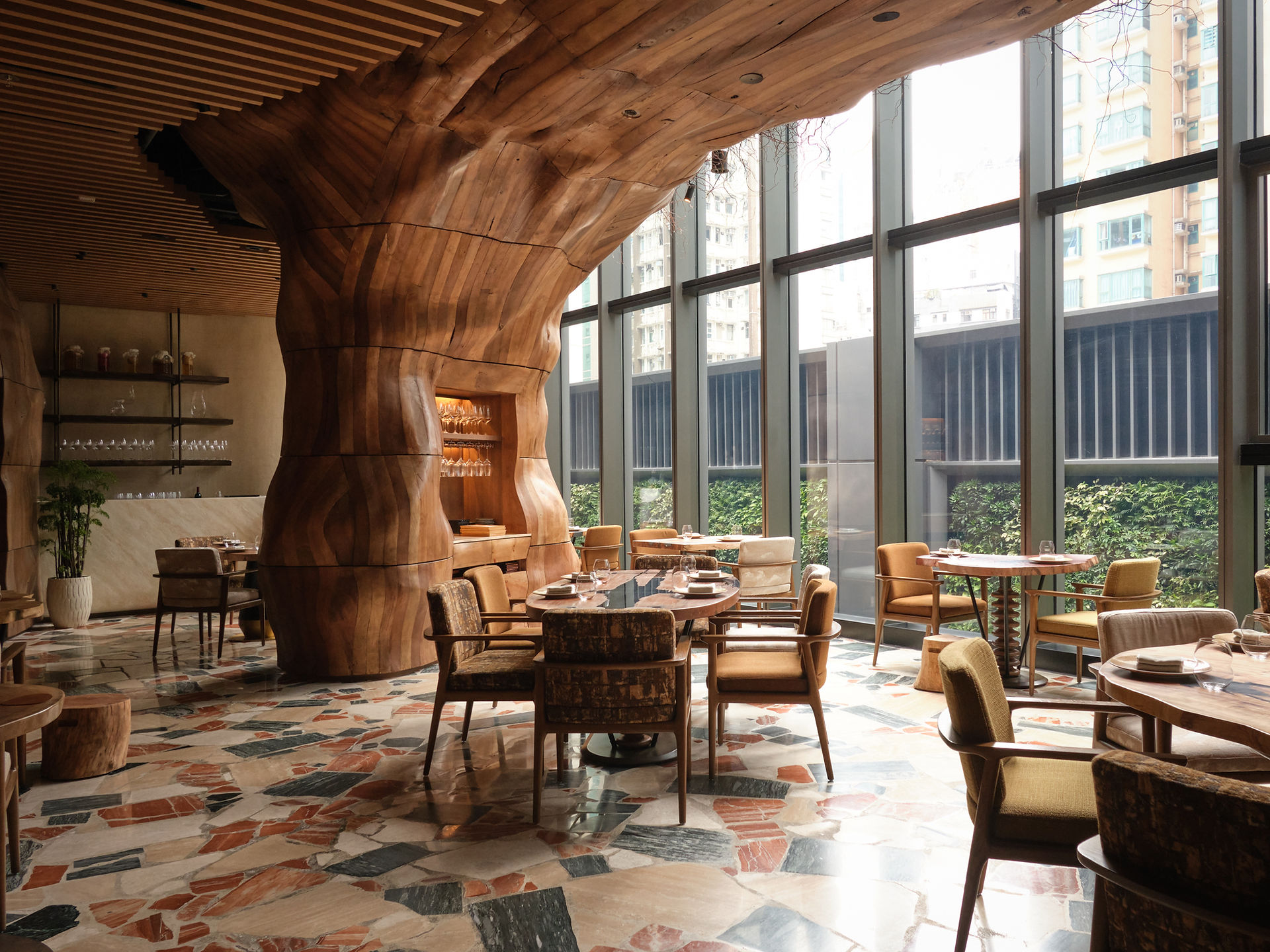
Roganic Hong Kong is a Michelin-starred and Michelin Green Star restaurant by British chef Simon Rogan MBE, whose Umbel Restaurants Group spans the UK, Malta, Hong Kong and Thailand and is widely recognised for its multi-starred, sustainability-led fine dining portfolio. Its 2025 relocation to Lee Garden One in Causeway Bay reflects a continuation rather than reinvention of Rogan’s philosophy: a tightly controlled, ingredient-led approach translated into an urban Hong Kong context. The kitchen is led by Executive Chef Oli Marlow with Head Chef Adam Catterall and Senior Sous Chef Mark Catchpole, operating within a structured group framework shaped by Rogan’s flagship restaurants such as L’Enclume, ensuring consistency across locations. The design is intentionally restrained, favouring natural textures and functional clarity over decorative excess, aligning with the restaurant’s circular, low-waste ethos. This discipline extends directly into its sourcing model, which is among the most clearly articulated in Hong Kong fine dining. Ingredients are drawn from New Territories producers including Wah Kee Farm.
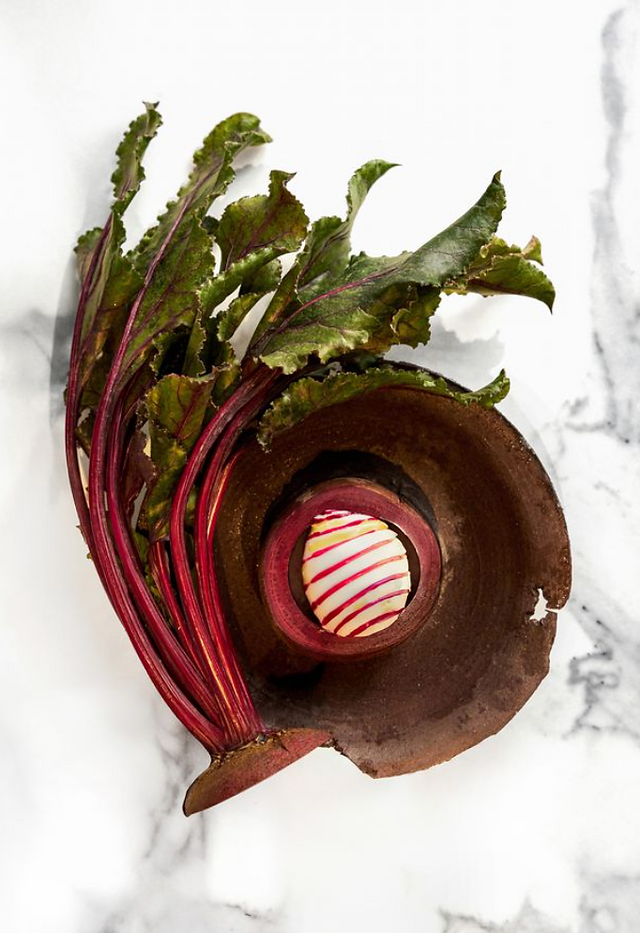
The cuisine follows a strict seasonal structure, with dishes built around full-ingredient utilisation and minimal waste. Menus typically move through snacks, starters, intermediates, mains and desserts, with preparations such as raw and cured seafood paired with fermented or pickled elements, vegetable courses centred on peak-season produce like beetroot and cabbage, and main dishes such as dry-aged duck or farm-sourced pork complemented by fruit reductions and house ferments. The restaurant’s circular approach extends across operations, with trimmings repurposed into stocks and ferments, and a drinks programme that mirrors this ethos through small-scale winemakers and non-alcoholic pairings developed from surplus produce.
Shop 402-403, 4/F, Lee Garden One, 33 Hysan Avenue, Causeway Bay


Feuille
At the Michelin-starred and Michelin Green Star Feuille by David Toutain, the relationship between kitchen and farm is less transactional than interpretive, shaped by a deep reliance on regenerative agriculture and the rhythms it imposes. Chef Joris Rousseau works closely with producers such as Farmhouse Productions, a farm known for regenerative practices that prioritise soil health, biodiversity, and natural growing cycles over industrial yield. This approach aligns with a broader shift within Hong Kong’s agricultural landscape, where small farms increasingly adopt organic and regenerative techniques supported by local certification bodies such as the Hong Kong Organic Resource Centre.
That sensitivity translates into dishes that feel almost botanical in composition. A recent sequence has included a study of tomatoes layered with shiso and lightly fermented juices, as well as roasted pumpkin paired with seed praline and herb oils derived from surplus greens, each element reflecting the farm’s output at a specific moment in time. Desserts continue this dialogue, with locally grown strawberries — often sourced from farms in the northern New Territories — served with floral infusions that mirror the surrounding ecosystem. Techniques are designed to extend and transform ingredients rather than overwrite them, with vegetable trimmings fermented into vinegars and shells from occasional seafood components repurposed into broths. Meat and fish appear sparingly, reinforcing a plant-forward philosophy aligned with ecological priorities, while Feuille positions itself as an active participant in agricultural preservation rather than a passive recipient of its produce.
5/F, The Wellington, 198 Wellington Street, Central

Mora Hong Kong
The Michelin Star and Michelin Green Star Mora’s interpretation of farm-to-table dining is defined by its decision to build an entire culinary identity around the ever-versatile soybean. Under the direction of Vicky Lau, the restaurant sources high-quality soy alongside a supporting cast of locally grown produce, much of it drawn from Hong Kong’s network of small farms and independent suppliers operating across the New Territories. While soy itself is often sourced regionally to ensure consistency, the restaurant complements it with vegetables cultivated through local organic systems. This focused sourcing model allows for an uncommon level of depth, with soybeans transformed daily into fresh milk, tofu, and delicate tofu skin, each iteration requiring precise control over temperature, coagulation, and timing.
This philosophy is articulated through dishes that explore soy in both subtle and expressive ways. A recent menu has featured udon noodle in seaweed soy milk with scallop and chive oil, and a res prawn mapo tofu with jasmine rice. Even dessert becomes a vehicle for exploration, with lychee soy cream with Ispahan ice cream. Seasonal vegetables sourced from Hong Kong farms are selected to frame rather than compete with the soybean, reinforcing a contained and deliberate sourcing strategy. Mora’s approach to sustainability lies in this restraint, reducing supply chain complexity while maximising craftsmanship, achieving a clarity that feels both modern and deeply rooted in Chinese culinary tradition.
G/F, 40 Upper Lascar Row (Cat Street), Sheung Wan

Cafe Bau
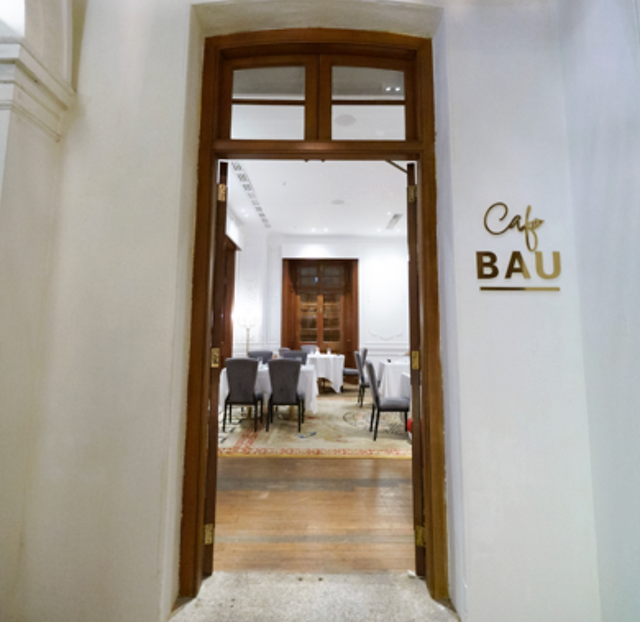
Café Bau by Chef Alvin Leung, aka the "Demon Chef", approaches farm-to-table dining with a sensibility rooted in preservation, drawing attention to Hong Kong’s diminishing agricultural heritage and the communities that sustain it. Its sourcing spans the New Territories and outlying islands, incorporating free-range chicken from farms in Fanling and seasonal produce from small growers, alongside rice cultivated in Yi O — one of the last remaining sites of traditional rice farming in the region.
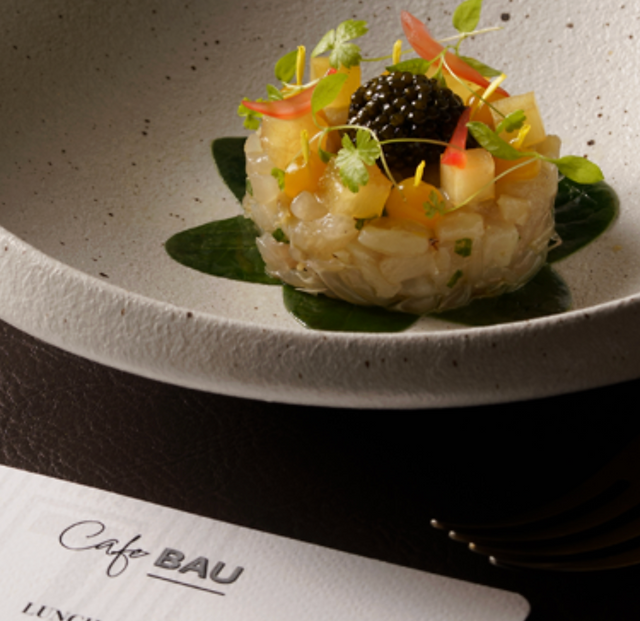
The cooking style mirrors this ethos, favouring clarity over complexity and allowing ingredients to retain their intrinsic character. Recent dishes have included the Hung Wan Farm Ping Yuen Chicken with Yi O rice and the Oscietra caviar-topped catches of the day. The Apple Mille Feuille dessert featured spiced apple with Kowloon Dairy milk gelato. The relationship between kitchen and supplier is less about innovation than continuity, with an emphasis on supporting producers whose work preserves biodiversity and traditional knowledge, ensuring these practices remain both relevant and economically viable.
G/F, FWD House 1881 Main Building, 1881 Heritage, 2A Canton Road, Tsim Sha Tsui

Amber
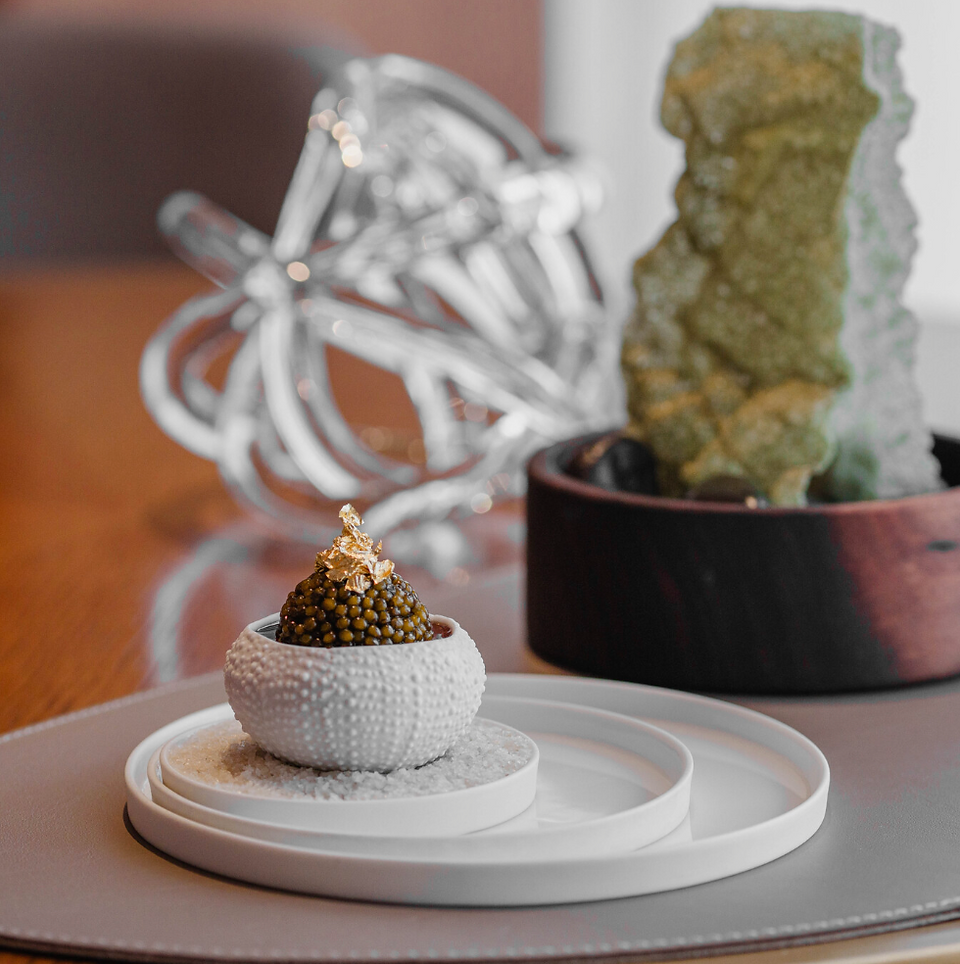
Amber’s approach to farm-to-table dining is characterised by precision, applying a systems-driven methodology to sourcing that aligns sustainability with technical excellence. Under Richard Ekkebus, the three MICHELIN-starred (and Green Star) restaurant has developed a supply chain that prioritises local and responsibly produced ingredients, with vegetables sourced extensively from farms across the New Territories, and seafood and proteins selected according to strict environmental criteria. This network reflects the broader ecosystem of over a hundred certified organic farms in Hong Kong, supported by institutional frameworks designed to promote sustainable agriculture in an otherwise import-reliant city.
Mandarin Oriental The Landmark, Hong Kong, 15 Queen's Road Central, Central


Comments