


.png)
Inside Amigo, a 1960s Fine Dining Restaurant That Blends White-Glove Service With Hong Kong Nostalgia

HONG KONG
Not only has Amigo endured for close to six decades — an almost unbroken stretch of service in a city where dining trends rise and fall with the seasons — it now finds itself quietly entering a new chapter.
Rather than reinventing itself, it refines what it has always been: a place of ritual, memory and old-world polish, now drawing in a new generation of diners as much for its nostalgia as for its unmistakable sense of occasion.

Long before the car horns of Wong Nai Chung Road settle into the softer rhythm of Happy Valley evenings, the restaurant’s golden sun already glows above the street — an emblem so familiar it has become part of the neighbourhood’s visual grammar.
Inside, however, Amigo has maintained its meticulously preserved private world — one that has been quietly accumulating history since 1967, when founder Yeung Wing Chung first opened it in Causeway Bay before relocating it to its current Happy Valley home in 1976. What began as a French restaurant staffed and run by local talent has, over nearly 60 years, evolved into one of Hong Kong’s most enduring hospitality institutions.


Amigo’s interiors were designed by architect Ho Tze Tung under Yeung’s direct supervision.
The space is wrapped in cedarwood — over 7,000 individual pieces — each one carefully charred to bring out a darker, more aged grain. The effect is immediate: warmth without modern gloss, formality without sterility. Upstairs, the main dining room unfolds in classic European register: red velvet seating, carved wooden chairs, and table settings anchored by Christofle silverware engraved with the Amigo emblem, still regularly sent back to France for maintenance. Nothing here is allowed to deteriorate quietly; everything is maintained, as if the act of preservation itself were part of the service.
There is also a 3,000-bottle wine cellar built into the original structure — an unusually ambitious decision for a Hong Kong restaurant of its era. It speaks to a founder who was not simply opening a restaurant, but building a long-term cultural object. Even the staircase leading to the dining room — each step calibrated precisely to five and a half inches for comfort — feels like a detail from another philosophy of hospitality, one where the guest experience begins before the menu is even opened. What gives Amigo its particular weight is not only its longevity, but the density of objects that seem to resist the passage of time.


A porcelain Lladró angel — one of only 400 ever made — rests quietly in a corner of the lounge. Nearby, decorative tiles sourced from European auctions sit embedded into the architecture like fragments of another continent. Works by 19th-century painter William Russell Flint hang within rooms where conversations still unfold in multiple languages, as they likely have for decades.
Even the entrance chair carries its own mythology: in 1973, it famously became the seat from which the first Miss Hong Kong pageant winner was crowned on television.
Amigo is one of those increasingly rare Hong Kong restaurants where some team members have remained for more than half a century. They do not perform nostalgia; they embody continuity. Tailcoats and white gloves remain standard. Service is measured, almost choreographed, in a way that feels closer to European grand dining traditions of the mid-20th century than to anything contemporary Hong Kong diners might expect.
Each afternoon, before service begins, guest names are embossed onto personalised memo pads using a traditional pressing machine.
In the evenings, live guitarists and vocalists move through the room, not as entertainment in the modern sense, but as part of the restaurant’s atmospheric architecture. Female guests receive a red rose. Smokeless candles are used despite the additional operational cost. Nothing is incidental, and very little is new — but everything is intentional.
Over the decades, Amigo has become something of an informal landmark in Hong Kong’s social landscape. It has hosted business leaders, artists, visiting dignitaries, and generations of families marking milestones — engagements, anniversaries, quiet celebrations that require a setting with memory already embedded into its walls.


The New Menu
It is into this environment that Amigo now introduces its latest development: Amigo Caviar, the restaurant’s first house brand, alongside a six-course Amigo Caviar Indulgence Menu priced at HK$980 per person.
The caviar itself is sourced from sturgeon raised in Heilongjiang under strict water quality controls, producing roe with a delicate grey hue and fine grain. Light salting preserves its natural character, allowing a soft, almost slow-building brininess to unfold on the palate.
Each guest begins the meal with a personal 10g tin. It can be tasted in the traditional Russian style, the more restrained French approach, or simply by hand, as many long-time Amigo diners still prefer.

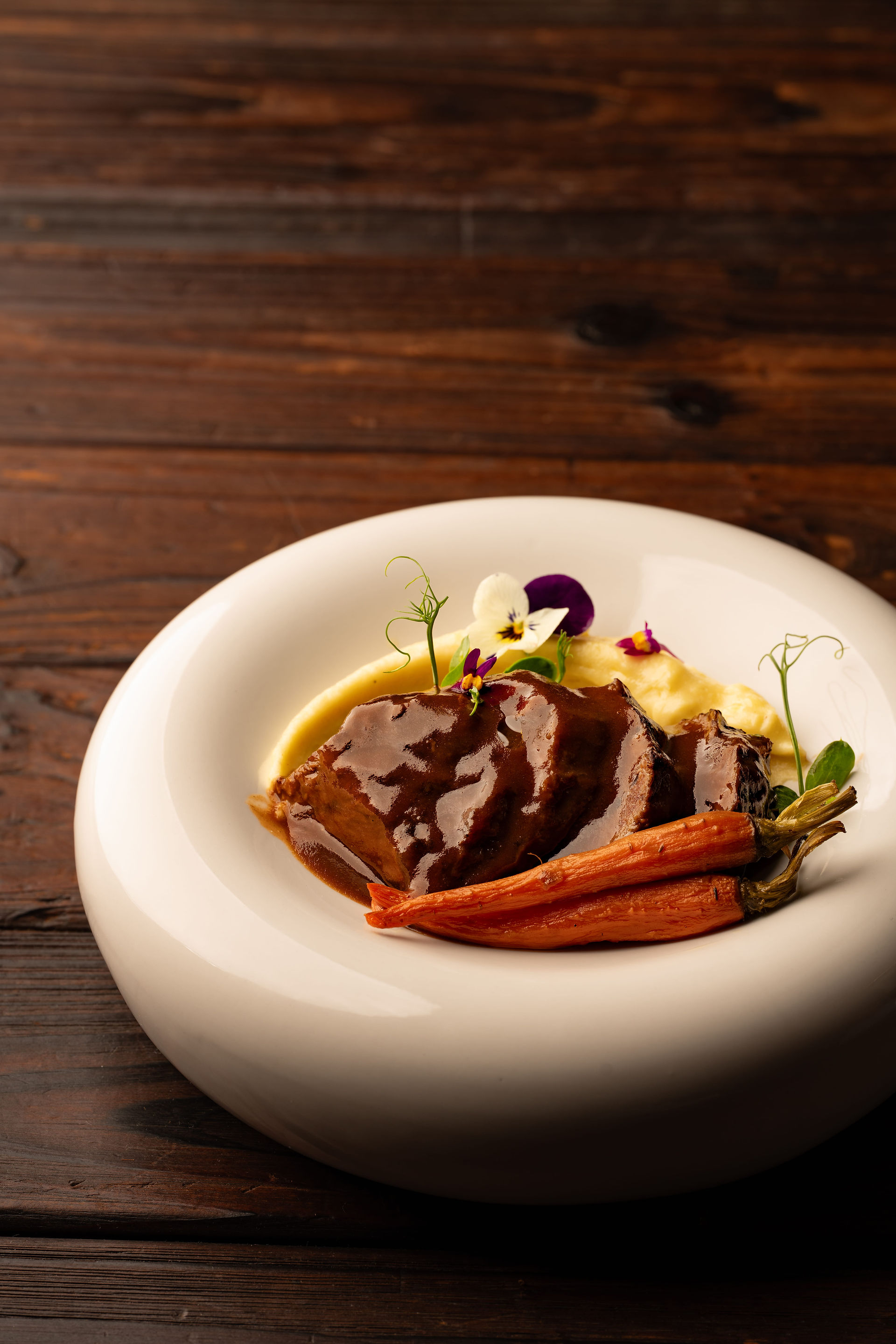

The menu that follows remains firmly within the restaurant’s established language: white asparagus potage with summer truffle, the signature “Lady Curzon” turtle soup, Chilean seabass with Champagne cream and caviar, seared scallops with herb ravioli, and a selection of classic French meat courses including Wagyu ox cheek and lamb loin. Desserts lean floral and restrained, finishing with jasmine mousse and strawberry jelly.
Not only has Amigo survived nearly 60 years of Hong Kong’s relentless culinary turnover—it has done so without abandoning the internal logic that made it distinct in the first place. It has not evolved by reinvention, but by accumulation; not by rebranding, but by continuity.
Location: 79A Wong Nai Chung Rd, Happy Valley, Hong Kong | Phone: +852 2577 2202 | Instagram: @amigorestaurant_hk


Comments