


.png)
14 Celebrities Who Have Worn Qipaos Over the Years

The qipao, or cheongsam as it's known in Cantonese, has journeyed from Qing dynasty court dress to red-carpet favourite, cinema icon, and contemporary wardrobe staple. Along the way, it has been worn by Hollywood legends, Cannes royalty, and a new generation of stars who understand that the qipao is not merely a garment — it's a statement of heritage, elegance, and identity.
Here are 14 celebrities who have worn the qipao beautifully over the years.

Bernice Liu in Qipology
Before we talk about the stars of cinema past, let's talk about the brand carrying the qipao into the future. Qipology, founded by US-born, Hong Kong-raised fashion entrepreneur Julie Liu, was born from a simple observation: qipaos were either prohibitively expensive designer pieces or cheap street-market versions. There was nothing for the modern woman who wanted something beautiful, well-made, and wearable. Beloved Hong Kong actress, singer, and entrepreneur Bernice Liu lent her elegance and star power to a brand dedicated to making qipaos accessible and wearable for contemporary women.

Anna May Wong in Limehouse Blues
Long before anyone spoke of cultural representation in Hollywood, Anna May Wong understood the power of what she wore. As the first Chinese-American movie star, Wong faced a Hollywood that wanted to typecast her. Her response was deliberate and elegant: she wore qipaos almost exclusively in public, using them as a quiet but powerful assertion of her identity. Though she had never visited China until she was thirty, Wong felt a deep connection to her heritage. When she finally travelled to Shanghai in 1936, she returned with over one hundred custom-made qipaos — including the iconic black gown with gold dragon embroidery now held in the Metropolitan Museum of Art's collection.

Grace Chan in Qipology
Miss Hong Kong 2013 and Miss Chinese International 2014 winner Grace Chan has since brought her effortless glamour to Qipology's mandarin-collared, pankou-buttoned designs, proving the qipao belongs just as naturally to the modern woman as to the screen.

Maggie Cheung: The Face of Qipao Cinema
When Wong Kar-wai's In the Mood for Love premiered in 2000, it did more than captivate audiences with its aching romance and breathtaking cinematography. It cemented the qipao as an object of global fascination. Maggie Cheung appears in twenty-one distinct qipaos throughout the film, each one tailored so precisely to her character, Mrs. Chan, that she seems to have been "poured into them". The dresses — rendered in technicolour roses, diaphanous chiffon, and structured tweed — act as a visual diary of Mrs. Chan's emotional landscape. When she wears simple, muted colours, she conceals herself. When she wears vibrant patterns, she commands the screen. The costumes, designed by renowned costume designer William Chang, became so iconic that they inspired a generation of designers and brought the qipao back into the cultural spotlight.

Gong Li: Cannes Royalty in Chinese Silhouettes
Gong Li has walked the Cannes red carpet more times than almost any other actress, and she has often chosen to do so in qipao-inspired silhouettes. In 1993, when Farewell My Concubine won the Palme d'Or — the only Chinese film ever to do so — Gong Li captivated audiences not only with her performance but with her graceful, poised presence. In 2004, she returned to Cannes for 2046 wearing a stunning black and silver embroidered qipao-style gown that drew international acclaim. Gong Li represents a particular kind of Chinese elegance: understated, powerful, and unmistakably sophisticated.

Anita Mui: The Performer's Qipao
The late Anita Mui, known as Hong Kong's "Diva of a Hundred Faces," understood that costume was central to performance. In the 1988 film Rouge, Mui wore traditional qipaos with delicate butterfly prints that became synonymous with the film's haunting beauty. Her portrayal of a 1930s courtesan searching across decades for her lost love is one of Hong Kong cinema's most heartbreaking performances, and the qipao she wore became part of its visual poetry. Beyond film, Mui frequently incorporated qipaos into her concert wardrobes, proving that the garment could be as dynamic and commanding on a stage as it was on a screen.
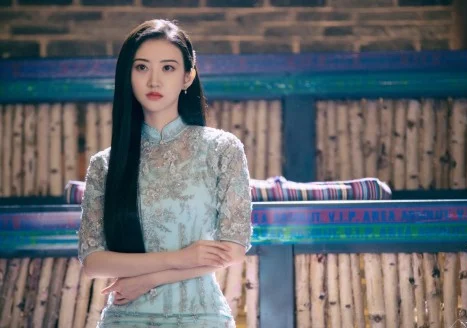
Jing Tian: Reviving the Qipao for a New Generation
Jing Tian brought the qipao back to mainstream Chinese television in a major way with the 2021 fantasy romance Rattan. Playing Si Teng, a mysterious woman who awakens after ninety years, Jing Tian wore an array of stunning qipaos that became central to the show's visual identity.

Taylor Swift in Zuhair Murad
At the 2012 Grammy Awards in Los Angeles, Taylor Swift turned heads in a floor-length Chinese-inspired gown by Lebanese couturier Zuhair Murad — featuring a high mandarin collar, richly embroidered bodice, and the figure-skimming silhouette characteristic of the qipao. It was a reminder that the garment's aesthetic has long captivated Western designers, its clean elegance translating effortlessly onto the global stage.

Rita Ora in Tom Ford
When the 2015 Met Gala celebrated "China: Through the Looking Glass" at New York's Metropolitan Museum of Art, Rita Ora arrived in a qipao-inspired look from Tom Ford that balanced boldness with reverence for the silhouette. The pop star and style chameleon brought her characteristic energy to a garment that rewards confidence — the high collar, the close fit, the deliberate slit — wearing it with the ease of someone who understood exactly what she was doing.

Margot Robbie in Gucci
At the Hollywood premiere of The Legend of Tarzan in June 2016, Margot Robbie chose a black Gucci cheongsam from Alessandro Michele's fall 2016 ready-to-wear collection — adorned with pink and green floral embroidery and finished with magenta mink cuffs. The look channelled old Hollywood glamour through a distinctly Chinese lens, and it was so striking that Melania Trump later wore the same design on a state visit to Beijing in 2017.

Demi Moore in Sau Lee
Sau Lee has made it their mission to reimagine the cheongsam for the modern woman — with signature pipa knot buttons, bold colours, and crystal embellishment that honour heritage while feeling strikingly now. Demi Moore, one of Hollywood's most enduring style icons, has been spotted in the brand's qipao-inspired designs.
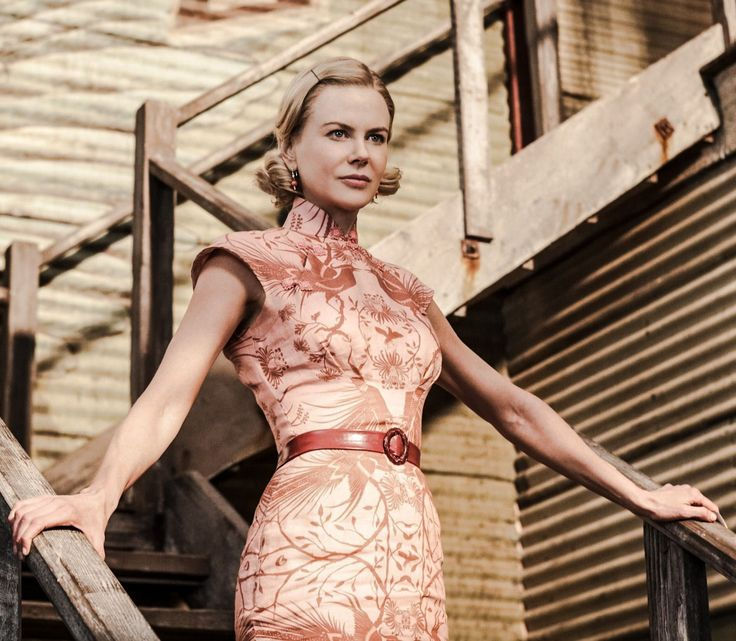
Nicole Kidman in Australia
In Baz Luhrmann's sweeping 2008 epic Australia, Nicole Kidman's character Lady Sarah Ashley undergoes a quiet but significant sartorial transformation - one beautifully captured in the film's most arresting costume: a red chrysanthemum-printed Chinese cheongsam. The film's costume department also drew upon archival research and interviews with descendants of Darwin's original settlers to ensure authenticity. The result is a garment that does more than simply adorn its wearer - it tells a story of adaptation, resilience, and the unexpected beauty of cultural exchange on the eve of World War II.

KATSEYE’s Megan Skiendiel
Megan Skiendiel is a member of the global girl group KATSEYE, formed through HYBE and Geffen Records' survival program Dream Academy. Of Chinese-Singaporean descent on her mother's side, with her mother's ancestral roots in Guangdong province, she represents a modern global generation for whom the garment can be a meaningful link to their multicultural identity. Her appreciation for her heritage and her ability to connect with it through language and family tradition position her perfectly to wear a qipao as a contemporary celebration of her roots.


Comments